

Ciao For Now Travel
Italy, Designed with Insider Access
Lazio
Discover Lazio — Ancient Power, Living History & Roman Grandeur
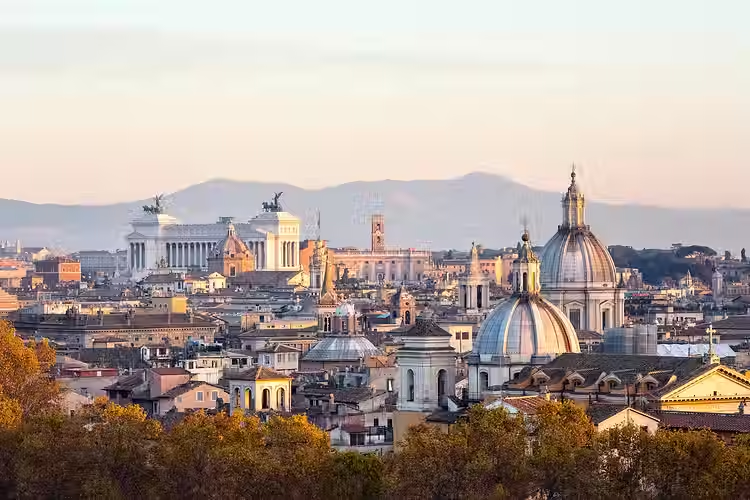
At the heart of Italy lies Lazio, a region where the ancient world and modern life exist side by side. Anchored by Rome — the Eternal City — Lazio unfolds into volcanic lakes, hill towns, sacred monasteries, and a sunlit coastline. This is a land of emperors and popes, pilgrims and poets, where every road tells a story and every meal feels timeless.
Main Towns
Rome — The Eternal City, layered with ancient ruins, Renaissance art, and vibrant modern life.
Tivoli — Villa-filled hill town famous for fountains, gardens, and Roman retreats.
Viterbo — Medieval papal city with thermal baths and intact historic walls.
Sperlonga — Whitewashed coastal village overlooking the Tyrrhenian Sea.
Castelli Romani towns — Frascati, Castel Gandolfo, and surrounding hill towns south of Rome.
Why You’ll Love It
Unmatched history spanning ancient, medieval, and Renaissance eras
Iconic landmarks paired with quiet countryside escapes
Hearty Roman cuisine and celebrated local wines
Easy balance of culture, nature, and coastal relaxation
Things To Do
Rome & Ancient Wonders
Explore the Colosseum, Roman Forum, and Pantheon
Walk Trastevere’s cobbled streets and hidden piazzas
Visit Vatican Museums and St. Peter’s Basilica
Toss a coin in the Trevi Fountain
Hill Towns & Countryside
Wander Tivoli’s Villa d’Este and Hadrian’s Villa
Visit medieval Viterbo and its papal quarter
Explore the Castelli Romani for wine, views, and village life
Lakes & Nature
Relax at Lake Bracciano or Lake Bolsena
Walk volcanic crater trails and lakeside paths
Enjoy thermal springs near Viterbo
Coast & Sea
Swim along Lazio’s Tyrrhenian beaches
Visit Sperlonga, Gaeta & Formia for coastal charm
Explore seaside ruins and Roman villas
Unique Lazio Experiences
Early-morning Rome walks before the crowds
Wine tastings in Frascati vineyards
Long Roman lunches followed by evening passeggiata
Eat & Drink
Signature Flavors
Bold, simple Roman cooking
Few ingredients, big flavor, deep tradition
Local Dishes
Carbonara — eggs, pecorino, guanciale
Amatriciana — tomato, guanciale, pecorino
Cacio e pepe — cheese and black pepper perfection
Saltimbocca alla Romana — veal with sage and prosciutto
Supplì — fried rice balls with molten center
Wines To Sip
Frascati Superiore — fresh, easy-drinking white
Cesanese del Piglio — Lazio’s flagship red
Est! Est!! Est!!! di Montefiascone — historic white
Where To Taste
Roman trattorie, neighborhood osterie, wine bars, countryside agriturismi, and hill-town restaurants
Where To Stay
Luxury & Boutique Hotels
Hotel Vilon
Hotel Chapter Roma
Victoria Terme Hotel
Charming Bases
Historic center or Trastevere for Rome immersion
Tivoli for gardens and hill-town elegance
Near lakes or coast for quieter stays
History & Culture of Lazio — Empires, Faith & Enduring Influence
Cultural Legacy
Birthplace of ancient Rome and Western civilization
Center of the Catholic Church and papal power
Renaissance art, Baroque architecture, and classical learning
Sacred & Scenic Sites
Colosseum, Roman Forum, and Pantheon
Vatican City and St. Peter’s Basilica
Villa d’Este, Hadrian’s Villa, and medieval monasteries
Travel Info & Tips
Getting There
Rome Fiumicino & Ciampino Airports — international gateways
High-speed trains connect Rome to all major Italian cities
Easy regional rail access to Tivoli, Viterbo, and lakes
Best Time To Visit
April–June & Sept–Oct — ideal weather, fewer crowds
Summer — hot in Rome; coast and lakes shine
Winter — quieter museums, festive atmosphere
Getting Around
Public transport and walking in Rome
Car recommended for countryside, lakes, and coast
Practical Tips
Start sightseeing early in Rome
Dress modestly for churches
Balance Rome with countryside or coast for a fuller experience